Spray painting results can differ significantly between indoor and outdoor environments due to a variety of environmental and operational factors. Understanding these differences is essential for achieving consistent, high-quality finishes.
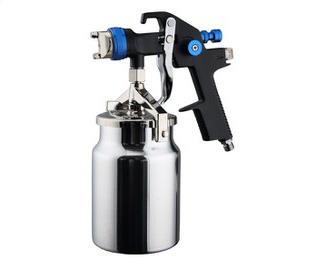
One of the primary factors is airflow. Indoor environments typically offer controlled ventilation, allowing for stable spray patterns and consistent atomization. In contrast, outdoor conditions introduce unpredictable wind, which can distort the spray pattern and cause uneven coverage. Even a high-performance tool like the LVLP Spray Gun Super-Fine, High-Saturation can be affected by sudden gusts, leading to overspray and material loss.
Temperature and humidity also play a major role. Indoors, these variables can often be regulated, ensuring optimal drying conditions. Outdoors, however, fluctuations in temperature and humidity can affect paint viscosity and drying time. High humidity can slow drying, leading to runs or sagging, while excessive heat can cause paint to dry too quickly, resulting in a rough finish.
Lighting conditions further contribute to variation. Indoor settings usually provide consistent lighting, making it easier to identify coverage issues during application. Outdoors, changing sunlight and shadows can make it difficult to see imperfections until the job is complete.
Surface contamination is another factor. Outdoor surfaces are more exposed to dust, pollen, and debris, which can settle on wet paint and compromise the finish. Indoors, controlled environments reduce the risk of contamination, leading to cleaner results.
Operator control is also impacted. Indoor spaces allow for better positioning and consistent spraying distances, while outdoor environments may require adjustments due to space constraints or environmental conditions. Maintaining a steady hand and consistent technique becomes more challenging outside.
Finally, equipment setup can differ. Indoor spraying often uses optimized pressure settings and controlled airflow systems, while outdoor setups may require adjustments to compensate for environmental variables.
In summary, differences in airflow, temperature, humidity, lighting, and contamination all contribute to the variation in spray results between indoor and outdoor environments. Professionals who understand and adapt to these factors can achieve consistent, high-quality finishes regardless of the setting.
Wenzhou Sico Spraying Tech.Co.,Ltd
Add: Daqiao Industrial Area,Beibaixiang Town,Yueqing,Wenzhou,Zhejiang
Zip code:325603
Tel:+86-577-67307836
Email:sales@sicotools.com
Mobile/Wechat:+86-13777716892


...
These SK-300 spray guns are fantastic! Love the no oring design, less leakage and easy maintenance. The atomization is perfect for automotive painting. Highly recommend!
Spiro Pittas,AustraliaPRD-817 gives me precise control over color, gloss, and gradients-art-level finish without top-tier pricing”
Olie-PaintzPRD-817 gives me precise control over color, gloss, and gradients-art-level finish without top-tier pricing”
Olie-PaintzPRD-817 gives me precise control over color, gloss, and gradients-art-level finish without top-tier pricing”
Olie-PaintzPRD-817 gives me precise control over color, gloss, and gradients-art-level finish without top-tier pricing”
Olie-Paintz


