Testing paint leveling is essential before applying material to a customer vehicle, especially when using a new clearcoat, primer, reducer, or color system. Leveling performance shows how well the paint flows after it lands on the surface. A material that atomizes well may still level poorly if viscosity, solvent speed, film build, or booth temperature is wrong.
Begin with a clean, flat test panel. Sand and prepare it the same way as the vehicle surface. If the vehicle is sealed, seal the test panel. If the job involves basecoat and clearcoat, use the same basecoat color and flash process before testing clear. Standardization is critical because substrate absorption and surface texture affect leveling.
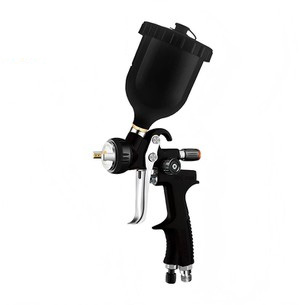
Set the spray gun according to the paint manufacturer's technical data sheet. Record nozzle size, inlet pressure with trigger pulled, fan width, fluid turns, spray distance, overlap percentage, reducer ratio, booth temperature, and humidity. When using LVLP Spray Gun Compact Structure, Flexible Operation, avoid changing settings during the test, because the purpose is to evaluate the paint under repeatable conditions.
Spray the test panel in three zones. In the first zone, apply a normal medium-wet coat. In the second zone, apply a slightly wetter coat while keeping the same distance and overlap. In the third zone, apply the manufacturer's maximum recommended wetness without causing a run. This comparison shows the material's leveling window and its tolerance to film build variation.
Observe the surface immediately after spraying and again after flash. Good leveling should show controlled flow without sagging, excessive orange peel, or edge crawling. Use consistent lighting from the side to reveal texture. Do not judge only by direct overhead booth light, because it can hide fine surface defects. An air spray gun used in this test must be clean, with an even fan pattern and no spitting from the fluid tip.
After curing, inspect gloss, DOI, texture uniformity, and sanding response if the coating will be polished. If the wettest zone looks smooth at first but shrinks later, the solvent balance or film thickness may be wrong. If all zones remain rough, check viscosity, reducer speed, air pressure, and gun distance.
Repeat the test after any adjustment. With LVLP Spray Gun Compact Structure, Flexible Operation, a documented leveling test helps painters select the right setup before production spraying, reducing rework and improving final finish predictability.
Wenzhou Sico Spraying Tech.Co.,Ltd
Add: Daqiao Industrial Area,Beibaixiang Town,Yueqing,Wenzhou,Zhejiang
Zip code:325603
Tel:+86-577-67307836
Email:sales@sicotools.com
Mobile/Wechat:+86-13777716892


...
These SK-300 spray guns are fantastic! Love the no oring design, less leakage and easy maintenance. The atomization is perfect for automotive painting. Highly recommend!
Spiro Pittas,AustraliaPRD-817 gives me precise control over color, gloss, and gradients-art-level finish without top-tier pricing”
Olie-PaintzPRD-817 gives me precise control over color, gloss, and gradients-art-level finish without top-tier pricing”
Olie-PaintzPRD-817 gives me precise control over color, gloss, and gradients-art-level finish without top-tier pricing”
Olie-PaintzPRD-817 gives me precise control over color, gloss, and gradients-art-level finish without top-tier pricing”
Olie-Paintz


